Wills & Wishes
Wills & Wishes
Depositing money in the registry of the court

The administrator of an estate may find it necessary to pay out bequests or inheritances to a beneficiary or heir who is a minor or otherwise incapacitated. One solution is to deposit the funds in the Registry of the Court.
1. The administrator will pay the money to the county clerk, along with a document identifying the beneficiary or heir. . The county clerk will give the administrator a receipt. The county clerk will notify the beneficiary or heir and also the court.
2. The county clerk will report on the funds to the beneficiary or heir annually.
3. The custodian of a beneficiary or heir can withdraw the funds by court order. The custodian must pay a bond of twice the amount withdrawn. The custodian must expend the funds according to the court order. The custodian must account for the funds to the beneficiary or heir.
4. The beneficiary or heir can withdraw the funds upon reaching age or having the disability removed. The beneficiary or heir must apply to the court for an order. The application must prove the beneficiary’s or heir’s identity and credentials. The county clerk will deliver the money according to the court’s order.

The Signing Ceremony

Once your Will is complete to your satisfaction, we will hold a signing ceremony in the office. You will come in with your two disinterested witnesses. Texas law requires that a will be “attested by two or more credible witnesses who are at least 14 years of age and who subscribe their names to the will in their own handwriting in the testator’s presence.” Any person including a relative, who is not named in your Will can sign as a disinterested witness. We will go through all your estate planning documents in order, observing the proper formalities, and ensuring that the execution is done correctly.
We do it this way for several reasons. First, signing the estate planning documents is a significant act and should not be done carelessly. Second, the documents are complicated, and it’s easy to overlook a step that renders the documents useless or at least more difficult to use. Third, by your signatures, you and your witnesses are swearing to certain facts, and you should be aware of them at the time you sign. Finally, some of the documents will be submitted to a court of law at one time or another, and their authenticity should be unquestionable.
We expect you to provide the two disinterested witnesses who will sign the documents with you for good reasons. First, the witness must swear that the testator is of sound mind. Such an oath is meaningless coming from a random stranger. Second, it is sometimes necessary to call a witness to court to testify to the authenticity of the Will. It will be easier to find your witnesses—and easier to persuade them to help— if they are family friends. Third, asking strangers to fulfill such a role is a small imposition, with potential to become a large imposition.
This is an occasion when you can honor family friends by including them in this important milestone. The ceremony itself is informative and enjoyable, and often the testator takes his witnesses out to lunch or dinner afterward.

Executor’s duties to the IRS

While Texas has no inheritance tax, and the federal estate tax applies only to multimillionaires, the executor of an estate still has duties toward the IRS.
1. The IRS publishes a general guide for executors:
- Publication 559, Survivors, Executors, and Administrators
2. Obtain a tax number for the estate, commonly known as the EIN. Generally, a bank will require a tax number before opening an estate account.
- Form SS-4, Application for Employer Identification Number.
- You can also do this online at: https://sa.www4.irs.gov/applyein/.
3. Notify the IRS of your position as executor.
- Form 56, Notice Concerning Fiduciary Relationship
- The notice remains in effect until you notify the IRS (by filing another Form 56) that your fiduciary relationship with the estate has terminated
4. File the final tax return of the decedent.
- Form 1040, (Final Income Tax Return for Decedent)
- Find instructions in Publication 559
5. File income tax returns for the estate if it has income.
- Form 1041, U.S. Income Tax Return for Estates and Trusts
Wills & Wishes FAQ
Wills & Wishes FAQ
Determination of heirship with administration
Here is a brief outline of the process for determining heirs and administering the estate of a Decedent, if there is no Will.
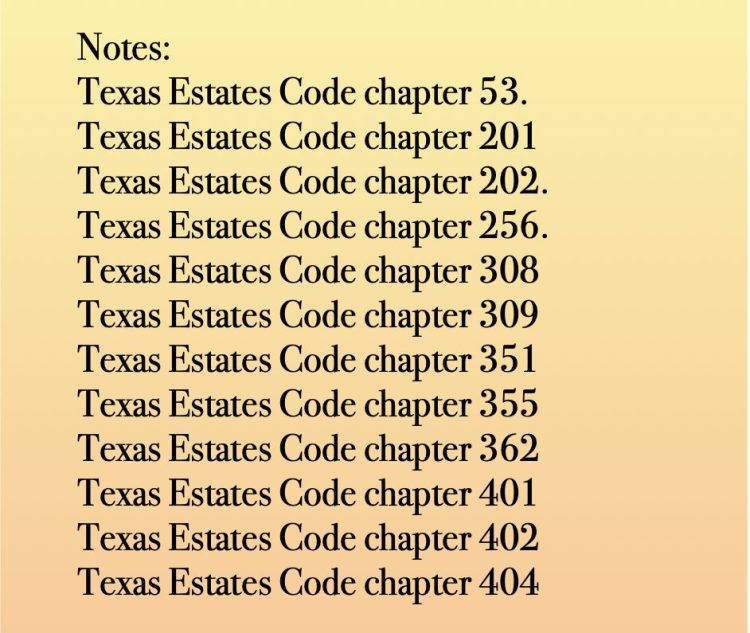
1. Attorney files an Application for Determination of Heirship and for Letters of Administration naming all heirs with the probate court.[i]
The application must be accompanied by:
- Filing fee; and
- Original death certificate.
2. Interested parties must receive notice.[ii]
- Clerk posts Notice of Citation on the courthouse bulletin board.
- Attorney publishes Notice of Citation in the newspaper.
- Attorney sends written notice to all heirs and devisees.
- Attorney files Proof of Citation and Proof of Notice with court.
3. Attorney asks all heirs to sign an agreement waiving citation and allowing independent administration.[iii]
- Attorney files signed agreements with court.
- Heirs who the sign agreements will not need to receive citation.
- Heirs who fail to sign the agreement will need to receive citation issued by the clerk.
4. The probate court will appoint an Attorney ad Litem to investigate the facts.[iv]
- Applicant must provide names of two disinterested witnesses who can testify in court to the family history.
- The ad Litem will interview the witnesses by phone.
- The ad Litem will file a report with the probate court.
- After the Attorney ad Litem files the report, Attorney sets a hearing in probate court.
5. The Attorney will prepare documents to be presented at the hearing.[v]
- Proof of Death and Other Facts to be signed by Applicant.
- Testimony Concerning Identity of Heirs to be signed by each witness.
- Order Determining Heirs to be signed by the Court.
6. The Applicant, the Applicant’s Attorney, and the two disinterested witnesses attend the hearing in probate court.[vi]
- The Attorney ad Litem also attends.
- Generally takes less than a half hour.
- Applicant testifies to death of Decedent and other facts.
- Disinterested witnesses testify to family history.
- Judge signs Order appointing Applicant to be Administrator.
- Administrator signs Oath.
- Clerk issues Letters of Administration.
7. Administration commences.[vii]
- If any heirs did not sign the agreement, administration is dependent.
- Administrator must post bond (paid by estate).
- Administrator must get court approval for some actions.
- Administrator must file final account.
- If all heirs signed agreement, administration is independent.
- Administrator need not post bond.
- Administrator can act without court approval.
- Administrator need not file final account.
8. Administrator takes care of settling estate.[viii]
- Gathers all assets.
- Pays bills.
- Distributes remaining assets to heirs.[ix]
- If administration is dependent, Administrator must get court approval for some steps.[x]
- If administration is independent, Administrator need not get court approval.
9. Attorney provides notices required by law. [xi]
- Publishes Notice to Claimants in local newspaper within 30 days.
- Sends Notice to Secured Creditors within 60 days.
- Files Proof or Certificates of Notice with probate court.
10. Attorney files Estate Inventory with the probate court within 90 days.[xii]
- Administrator must furnish Attorney with information for drafting the Inventory.
- Court signs order approving inventory.
12. If Administration is independent, stop here, the court process is complete. There may be more work to do to administer the estate.
13. If Administration is dependent, Administrator completes the administration of the estate, and Attorney finishes by filing Final Account.[xiii]
- Administrator provides to Attorney a list of assets collected, debts paid, debts not paid (should be none), assets remaining (should be none), distributees who received assets.
- Attaches receipts.
- Attorney drafts the Final Account and Files with court.
- Attorney serves citation on heirs.
- Court examines and approves the Final Account.
14. The heirship and administration process is complete.
Distribution of the Net Estate

Distribution of the net estate is just about the last and happiest duty of the executor or administrator. Even so, it must be done properly.
1. Distribution is only done after a long list of tasks has been completed:
- Take possession and take care of all the property of the estate.
- File an estate inventory and keep records of all transactions on behalf of the estate.
- Collect all claims and recover all property owned by the estate.
- Set aside a family allowance, in certain instances.
- Pay expenses of last illness, expenses of burial, and expenses of administration.
- Pay claims against the estate, including debts of decedent.
2. The net estate is the sum total of assets left after all the steps listed above have been completed.
3. As a fiduciary, the executor or administrator must be fair and impartial among all beneficiaries or heirs.
4. If the decedent left a Will, the executor must distribute the net estate to the beneficiaries according to the instructions in the Will.
- Follow the instructions for distribution in the order they are listed in the Will.
- However, watch for formulas that modify one distribution based on another.
- Also, if the beneficiary predeceased, pay attention to whether the gift is then to the beneficiary’s heirs, or if it then lapses.
5. If the decedent died intestate, the administrator must distribute the net estate to the heirs according to the proportions ordered by the court.
- The order will set out the percent of the estate due to each heir.
- Note that an heir may own different shares of different types of assets.
- The percentages are set by the Texas Estates Code.
6. To distribute real property, the executor or administrator should sign a properly drafted distribution deed.
7. The executor or administrator should obtain a signed receipt from each beneficiary or heir for each distribution.

Affidavit in Lieu of the Estate Inventory

Within 90 days after receiving letters testamentary or letters of administration, the representative of the estate must file an Inventory, Appraisement, & List of Claims. This document must be signed under oath.
Under certain conditions, the representative of the estate may file an affidavit in lieu of the inventory. The affidavit is due on the date the inventory is due.
1. The affidavit must state:
- that there are no unpaid debts except for secured debts, taxes, and expenses of administration.
- that all beneficiaries entitled to an inventory have received one.
2. A beneficiary is not entitled to an inventory if
- The beneficiary is entitled to less than $2,000 in gifts;
- The beneficiary has received all gifts before the affidavit is filed; or
- The beneficiary has waived the inventory in writing.
3. Any person interested in the estate may request an inventory.

Process for Probating a Will with a Dependent Executor

This is a brief outline of the process for probating the Will of a Decedent when the will does not specify an independent executor. The outline is not exhaustive, but it gives a general overview.
1. Attorney files an Application Probate of Will Produced in Court and for Letters Testamentary with the probate court.[i]
The application must be accompanied by:
- Filing fee.
- Original Death Certificate.
- Original Will.
2. Wait 10-15 days while Citation to Interested Parties is posted by the clerk.[ii]
3. Set a hearing in probate court.
4. The Applicant and Applicant’s Attorney attend the hearing in probate court.[iii]
- Generally takes less than a half hour.
- Applicant testifies to death of Decedent, authenticity of Will, and other facts.
- Judge signs Order appointing Applicant to be Executor.
- Executor signs Oath.
- Clerk issues Letters Testamentary.
5. Executor administers the estate.[iv]
- Gathers all assets.
- Pays bills.
- Distributes remaining assets to beneficiaries.
6. Attorney provides notices required by law.
- Publishes Notice to Claimants in local newspaper within 30 days.[v]
- Sends Notice to Secured Creditors within 60 days.[vi]
- Sends Notice to Beneficiaries within 60 days.[vii]
- Files Proof or Certificates of Notice with probate court.
7. Attorney files Estate Inventory with the probate court within 90 days.[viii]
- Executor must furnish Attorney with information for drafting the Inventory.
- Court signs order approving inventory.
8. Executor must obtain court approval to sell property, pay bills, and take any other actions.
9. Executor completes the administration of the estate, and Attorney finishes by filing Final Account.[ix]
- Administrator provides to Attorney a list of assets collected, debts paid, debts not paid (should be none), assets remaining (should be none), distributees who received assets.
- Attaches receipts.
- Attorney drafts the Final Account and Files with court.
- Attorney serves citation on beneficiaries.
- Court examines and approves the Final Account.
.
The probate process is complete. There may be more work to do to administer the estate.

Determination of heirship without administration
Here is a brief outline of the process for determining the heirs of a Decedent, if there is no Will.
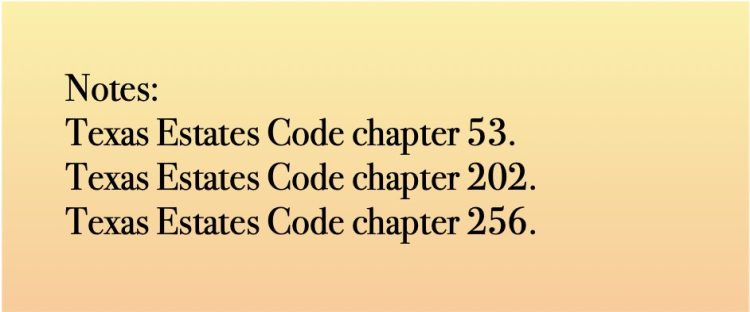
1. Attorney files an Application for Determination of Heirship naming all heirs with the probate court.
The application must be accompanied by:
- Filing fee; and
- Original death certificate.
2. Interested parties must receive notice.
- Clerk posts Notice of Citation on the courthouse bulletin board.
- Attorney publishes Notice of Citation in the newspaper.
- Attorney sends written notice to all heirs and devisees.
- Attorney files Proof of Citation and Proof of Notice with court.
3. Attorney asks all heirs to sign an agreement waiving citation and allowing independent administration.
- Attorney files signed agreements with court.
- Heirs who the sign agreements will not need to receive citation.
- Heirs who fail to sign the agreement will need to receive citation issued by the clerk.
4. The probate court will appoint an Attorney ad Litem to investigate the facts.
- Applicant must provide names of two disinterested witnesses who can testify in court to the family history.
- The ad Litem will interview the witnesses by phone.
- The ad Litem will file a report with the probate court.
- After the Attorney ad Litem files the report, Attorney sets a hearing in probate court.
5. The Attorney will prepare documents to be presented at the hearing.
- Proof of Death and Other Facts to be signed by Applicant.
- Testimony Concerning Identity of Heirs to be signed by each witness.
- Order Determining Heirs to be signed by the Court.
6. The Applicant, the Applicant’s Attorney, and the two disinterested witnesses attend the hearing in probate court.
- The Attorney ad Litem also attends.
- Generally takes less than a half hour.
- Applicant testifies to death of Decedent and other facts.
- Disinterested witnesses testify to family history.
- Judge signs Order Determining Heirs.
- Administrator and witnesses sign their testimony.
7. An heir named in the judgment may collect money owed to him through the Decedent.
Establishing heirs of an estate on an affidavit

Here is a brief outline of the process for establishing the heirs of a Decedent, by filing a small estate affidavit.
No administration necessary
1. Where the decedent died intestate, no administration is necessary if the value of the estate assets is less than $75,000.
- This maximum value does not include homestead and exempt property.
Determining heirs
2. Attorney files with the probate court a Small Estate Affidavit that:
- Lists all known estate assets and liabilities;
- names all heirs and gives their addresses;
- gives relevant family history showing heirship and shares of taking.
3. The affidavit must be signed by:
- Two disinterested witnesses; and
- All of the distributees.
4. The court may hold a hearing on the Affidavit.
5. The judge approves the Affidavit.
Collecting the small estate
6. Obtain certified copies of the Affidavit from the clerk.
- Present a certified copy of the Affidavit to any person owing money to the estate.

 CraveyLaw